Hemingway’s Iceberg
“Since Hemingway, every macho American writer has pretended to be a great fighter.” Or at least that’s what writer and filmmaker Robert Alan Arthur claimed in 1975.
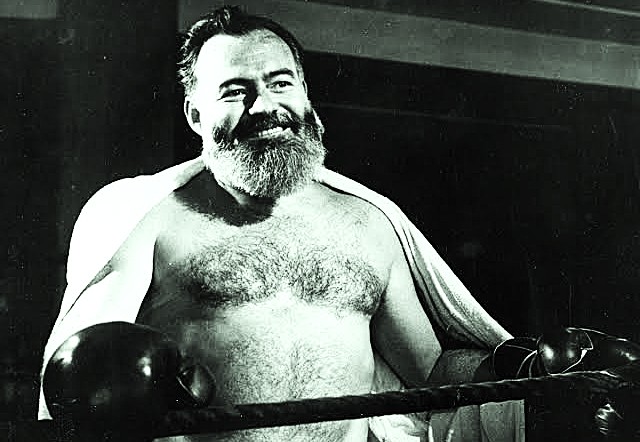
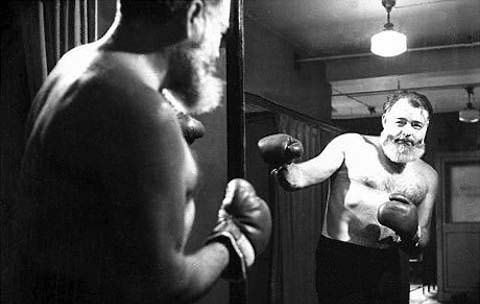
Few authors have left as sizable imprint on the landscape of American letters as Ernest Hemingway. “Papa,” as he took to being called, deliberately cast himself in a paternal, alpha-male role, creating a larger-than-life, masculine persona: writer, adventurer, and all around man’s man. For Hemingway, boxing was an essential component of that masculine image. Tall tales and unconfirmable anecdotes regarding Hemingway’s boxing life have circulated over the years, coalescing into a compelling, if perhaps questionable, mystique—a biography by aggregate. Some of the stories were spread by the author himself. The man even once wrote, “My writing is nothing. My boxing is everything,” for Pete’s sake.
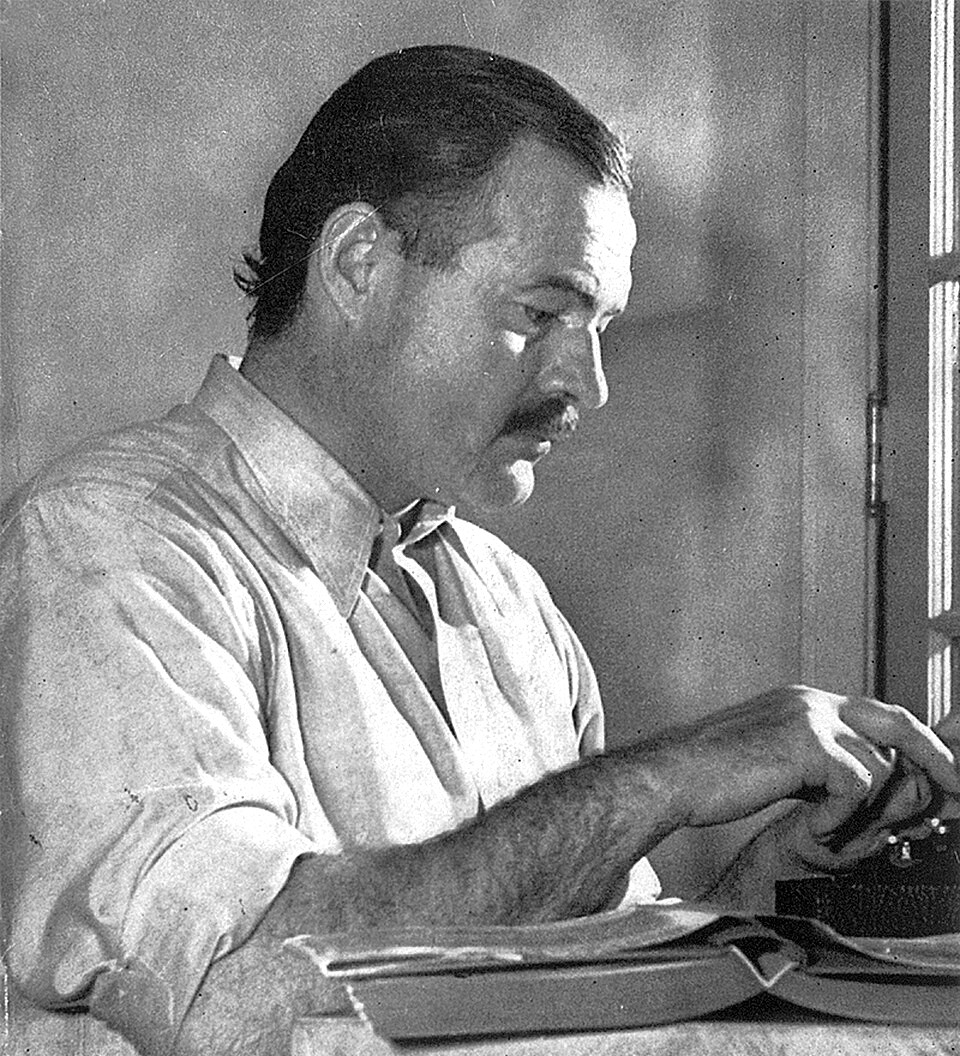
Keeping in mind the human tendency to skew recollections in our own favor, it seems prudent to seek out the opinions of knowledgeable, third-party observers whenever possible. Luckily for us, Hemingway sparred in front of some of boxing’s most judicious eyes. One such witness was A. J. Liebling, famed writer and bon vivant, who, after seeing Hemingway display his skills in the ring, coolly described the author as “not particularly evasive.”
Author W. C. Heinz sparred with Hemingway, though their clash was entirely verbal. Another writer, the poet Wallace Stevens, got the worst of it, apparently. In the twilight streets of Key West, the two writers came to blows and Stevens landed one clean shot on Hemingway’s jaw. Although the jaw remained intact, Stevens’ hand was broken in two places. The embarrassed poet wrote to his wife that he had injured himself falling down some stairs.
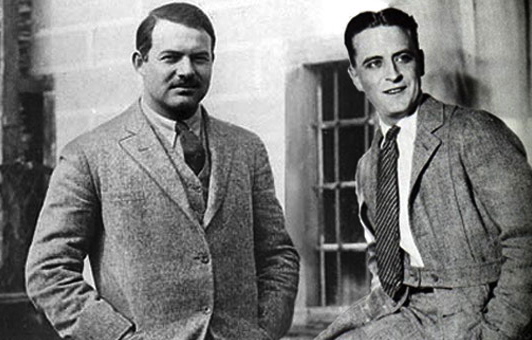
Another author who famously locked-up with “Papa” was Morley Callaghan who decked Hemingway during a sparring session in a Paris gym. Nonother than F. Scott Fitzgerald was the timekeeper and he somehow got confused and rang the bell after four minutes of action instead of three. Near the end of the prolonged round Callaghan scored a clean knockdown over Hemingway and Ernest never forgave Fitzgerald for the blunder.
It wasn’t just literary types in Hemingway’s ring; heavyweight champion Jack Dempsey recalled meeting Ernest in the boxing gyms of Paris. “I had this sense that Hemingway, who really thought he could box, would come out of the corner like a madman,” recalled Dempsey. “To stop him, I would have to hurt him badly [and] I didn’t want to do that to Hemingway. That’s why I never sparred with him.”
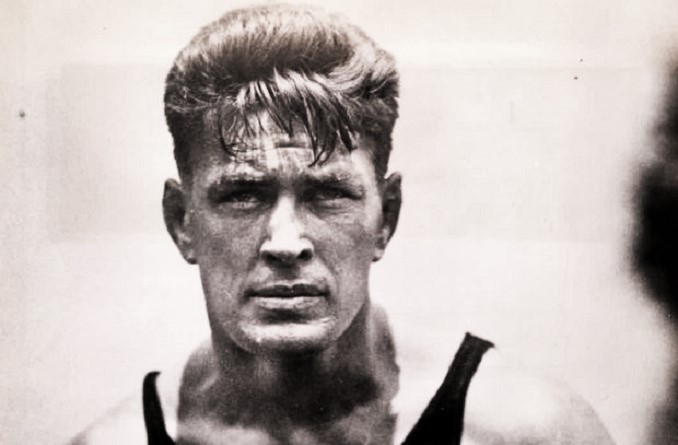
It was in Cuba that Hemingway received another heavyweight champion, Dempsey’s conqueror, Gene Tunney, who tells a story not unlike Jack’s. Tunney had a trick maneuver he wanted to demonstrate to “Ernesto,” as he called Hemingway, but when Tunney made his demonstration, Hemingway saw an opening. He asked Tunney to repeat the maneuver. When “The Fighting Marine” complied, “Ernesto” responded by throwing an elbow into the former champion’s jaw. Tunney was appalled. He shoved Hemingway back and launched a vicious one-two combination, holding his well-trained fists back just an inch shy of the novelist’s jaw. The blood drained from Hemingway’s face.
Only a sucker tries to beat a man at his own game. Especially when that man is a former world champion who had bested Dempsey twice, in addition to Harry Greb and Tommy Gibbons. Writing about Hemingway’s attempt to get one over on him, Tunney offered a wise and conciliatory admission: “I certainly wouldn’t have attempted to beat Ernesto at writing.”
Based on these accounts, Hemingway the boxer possessed more ego than talent. So what about his boxing writing? How much did Hemingway actually write about the sport which is so bound up with his legacy of overbearing masculinity? The truth is, he wrote some but not too much.
As a journalist, Hemingway covered the famous Jack Dempsey vs Georges Carpentier clash, one of the biggest sporting events of all-time, with a feature essay in The Toronto Star entitled “Prizefight Women.” The article focused on the reactions of the huge crowd at the match held in a makeshift stadium at Boyle’s Thirty Acres in New Jersey and the women swooning over the war hero from France. Hemingway expressed annoyance with them after their idol was knocked out by Dempsey in four rounds and their seeming lack of awareness regarding the actual physical risks both fighters were taking. Years later Hemingway covered the Joe Louis vs Max Baer duel in 1935 for Esquire magazine and wrote a feature piece which predicted the greatness of the man who would later become the most dominant heavyweight champion of his time. “Too good to be true, and absolutely true,” Ernest wrote of Louis, calling him “the most beautiful fighting machine I have ever seen.”
“Robert Cohn was once middleweight boxing champion of Princeton,” begins Hemingway’s 1926 novel The Sun Also Rises, a fictionalized version of his time in Paris following World War I, but the book is no boxing novel. The sport is merely a contextual detail, a part of Hemingway’s literary world but not a central part. Hemingway based Cohn on real-life author Harold Loeb, but he does not cast the former boxer as heroic; pugilism here does not translate automatically into glory, as bullfighting would in his stories.
Hemingway never wrote a full-fledged boxing novel as most of his writing on pugilism comes in the form of short stories, three of them in total, and all originally published in the 1920s: “The Battler” (1925), “The Killers” (1927), and “Fifty Grand” (1927). “The Battler” is from a series of stories focused on a protagonist named Nick Adams, a recurring character based loosely on himself. In the story Adams is thrown off a train and near the tracks he meets two men. One is an ex-fighter named Ad Francis, who suffers from what was then called “dementia pugilistica,” now identified as Chronic Traumatic Encephalopathy, or CTE. The other is an African-American man named Bugs, who looks out for Francis. They take Adams back to their camp to eat and talk, and we learn some of the details of Francis’s career. After a brief confrontation, Adams moves on. It’s a short piece without any ring action, interesting primarily for its depiction of the broken-down fighter.
“The Killers” is a meatier story, also featuring Nick Adams, and depicting boxing’s connection to organized crime. Set in Illinois, it introduces two hitmen waiting in a restaurant for a Swedish heavyweight named Ole Anderson. They plan to kill him but we never learn the motive. The hitmen tie up the kitchen staff, including Adams, but Anderson never shows up and the restaurant owner eventually sends Adams to go warn Anderson about the potential hit but the boxer seems unphased by the news. As with “The Battler,” there is no actual boxing in the story. The sport and its corruption provides the backdrop, not the action. If the story of two hitmen waiting to assassinate a boxer sounds familiar, it may be because the story was made into a movie in 1946 starring Burt Lancaster and Ava Gardner, while it also served as inspiration for one of the tales in Quentin Tarantino’s Pulp Fiction.
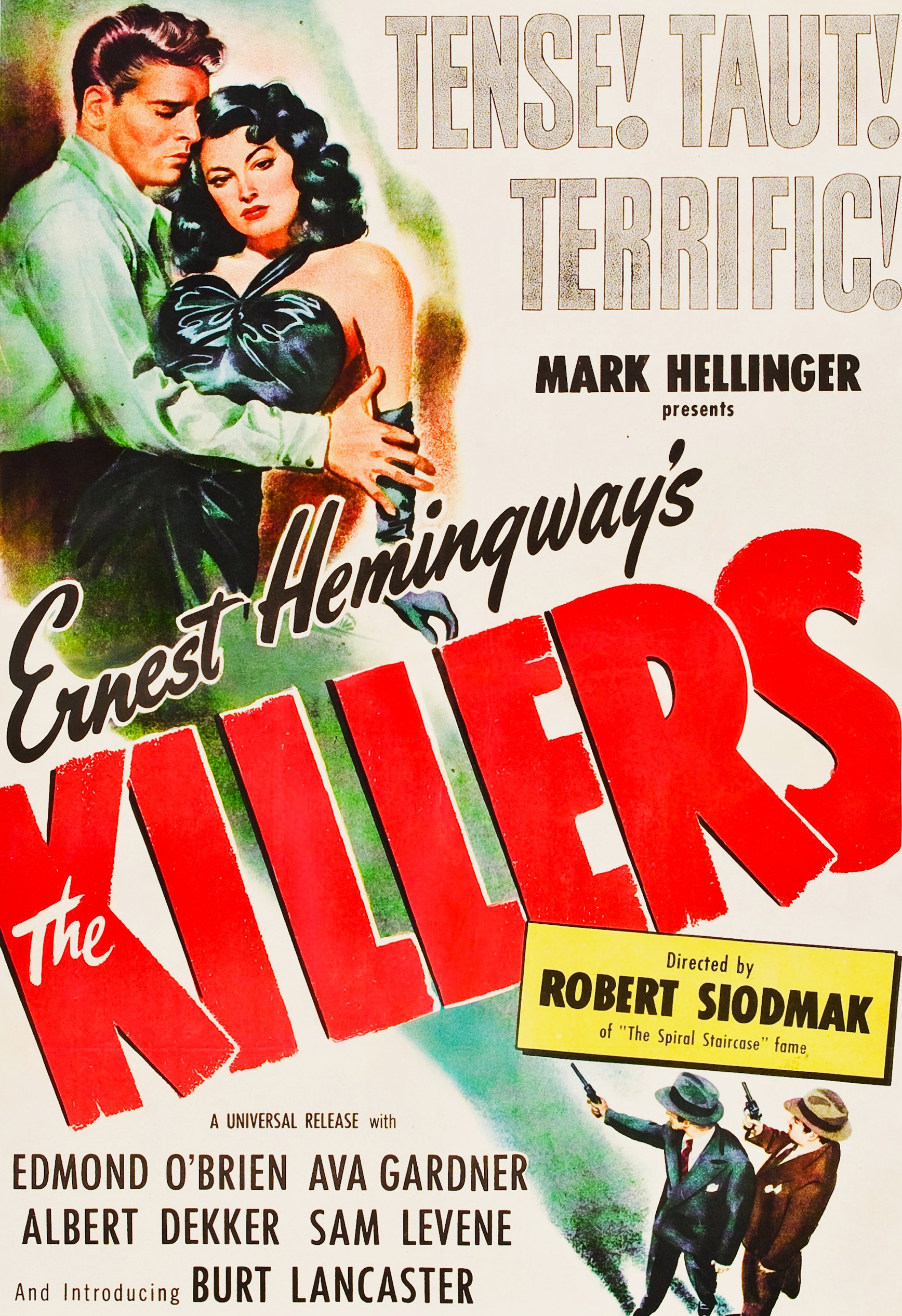
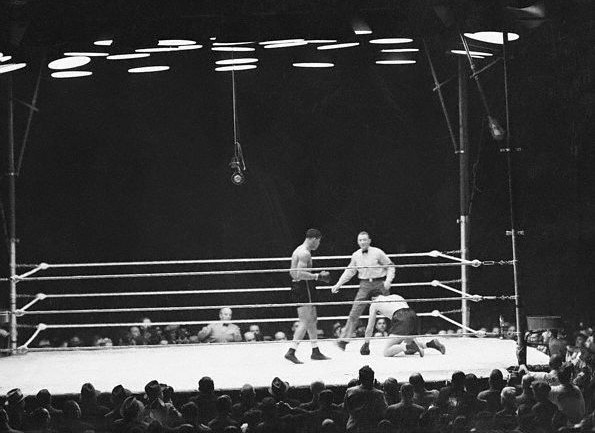
If “The Killers” is very good, then Hemingway’s third boxing short story, “Fifty Grand,” is great. As with “The Killers,” it is a story of boxing’s connections to crime and corruption. Boxer Jack Brennan is preparing to battle Jimmy Walcott, who is favored to win. Before the fight, Brennan has a meeting with two men described as “wise boys” who own a pool room. We never learn what is said at this meeting between the “sharpshooters” and the fighter, but Brennan later admits that he had bet fifty grand on the other man to win. “It ain’t crooked,” says Brennan. “How can I beat him? Why not make money on it?” Spoiler alert: during the fight, Walcott hits Brennan with a low blow. Fearing that Walcott could lose by disqualification, Brennan endures the agony and stays on his feet before guaranteeing his opponent’s victory by blatantly fouling him in return.
In these three short stories, we get a sense of Hemingway’s familiarity with fighters, but not much else. There is precious little description of boxing’s physicality. Nor is there much on its metaphysical component, the fighting spirit. Hemingway was more interested in what he termed “grace under pressure,” the mantra that guided his art, and, possibly, his life. The fighters in Hemingway’s stories are subjected to various pressures, but these pressures manifest in ways not unique to the ring.
The minimalism he sharpened in those boxing short stories would come to be the defining element of his prose. Even today, the use of terse, declarative sentences and direct, uncluttered description can still be called “Hemingway-esque.” He summarized some of his approach to prose in his 1932 nonfiction book Death in the Afternoon, a book which concerns itself mainly with Spanish bullfighting, which he occasionally finds analogous to his own writing process. In one famous passage, however, he articulates an altogether different metaphor for his minimalist prose. It is commonly referred to as the “Iceberg Theory” of writing.
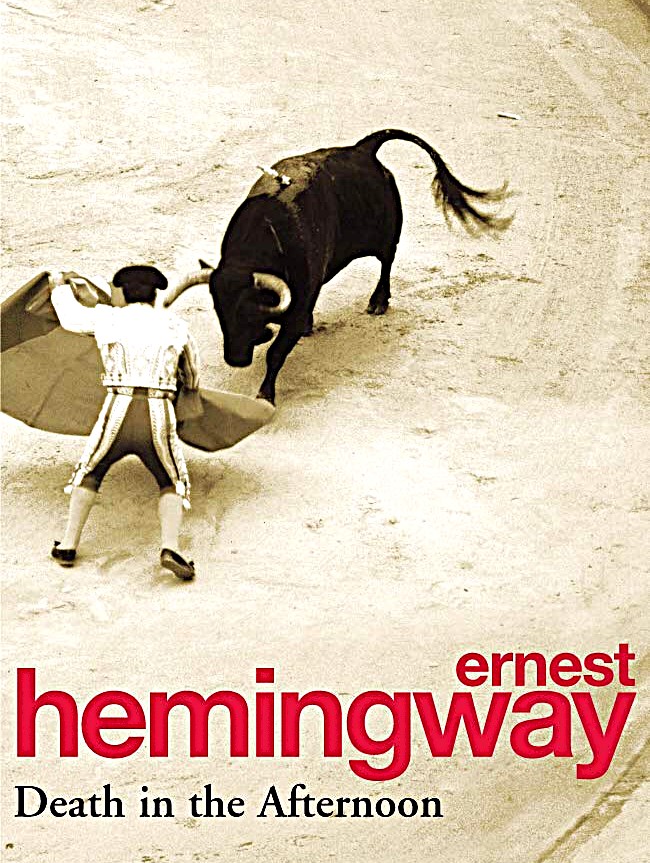
For Hemingway, the text on the page should never be the whole story. Just as an iceberg is mostly underwater and out of view, so too are essential elements of the story. The words on the page are just the tip of the iceberg. It is up to the reader, as an active participant in the experience, to intuit what remains submerged, and to fill in the gaps left intentionally by the author.
Given that he produced only three boxing stories, a notably small output considering both how many stories he published and how thoroughly identified he is with the sport, I wonder if boxing, and in particular the ring action, presented a challenge to Hemingway and his “Iceberg Theory.” Joyce Carol Oates has described boxing as wordless and “lacking a language” to the extent that it “requires others to define it, celebrate it, complete it.” Perhaps Hemingway found his icy minimalism ill-suited to the already silent sweet science. Perhaps the sport contained too many natural “omissions” of its own.
Throughout his sporting life, Hemingway eschewed team sports in favor of individual contests: boxing, bullfighting, big-game hunting, and fishing. Such contests seemed to speak to Hemingway’s worldview of opposition and existential struggle. There was also significant overlap between his personal sporting life and his fictional sporting stories, suggesting that Hemingway was comfortable blurring the lines between the two, a useful strategy for establishing a larger, mythopoetic legacy for himself. And while boxing appears as a distinct element in his literary fiction, it is never a central feature. “Papa” takes the sport as a fact of the world, something to be observed but not deeply interrogated.
Hemingway, or more specifically, the legend of Hemingway, captured the public’s imagination. His talent in the ring may be the subject of skepticism and doubt, but his influence on the page is beyond question, even today, five and half decades after his death by suicide in 1961. Like an iceberg, much of Hemingway’s cultural influence is now under the surface, but it remains and indeed, “Papa” maintains a cultural ubiquity strong enough that he can still be identified by a single name—Hemingway. –Andrew Rihn