Blood And Hate
Even beyond the fact that he is an all-time great of the middleweight division, I have always regarded Marvelous Marvin Hagler as a unique and very special pugilist. A true champion in every sense of the word, he was a “throwback,” before we even knew we needed throwbacks. Like many top fighters in the 1970s and 80s, he took on all comers and earned his spot as an all-time great by constantly proving himself in the ring. No hype machine, no Olympic gold medal, no special attention from the TV networks, just battle after battle, win after win. He was spartan in his training, focused and ruthless in the ring, and loyal to his small circle of confidants.
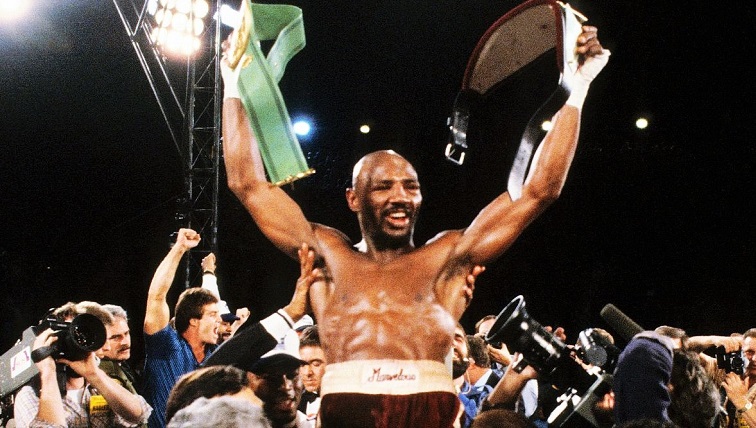
Looking back, Hagler seems like the kind of fighter who would have fit in as well in the late 19th or early 20th century as his did in his own era. He could have been a fighter like Gene Tunney, Harry Greb, or even Bob Fitzsimmons, moving up in weight, taking on naturally bigger men, and in all likelihood beating them. I am not saying Hagler could have beaten the best heavyweights of his day, just that he would have succeeded during that era in a way other rivals of his time, like Sugar Ray Leonard, probably wouldn’t have.
Of course, Hagler didn’t do any of that. But the stories in Dave Wedge’s Blood and Hate, which show Hagler’s journey to becoming the undisputed middleweight champion of the world, only solidify my conviction that he could have. As solid and determined as he looked, with his menacing glare, his ‘WAR’ hat, and his gleaming bald head, this book sets out the case that he was in fact even tougher than any of us knew.
Wedge tells the story of Hagler‘s life from his formative years in Newark during some of the worst rioting in 20th century America, through to when Marvelous Marvin journeyed to London, England to finally capture a world championship in 1980. That progression alone would make for an epic boxing career, but the fact every reader will learn how much more of the story there is, shows just how rich Hagler’s boxing life really was.
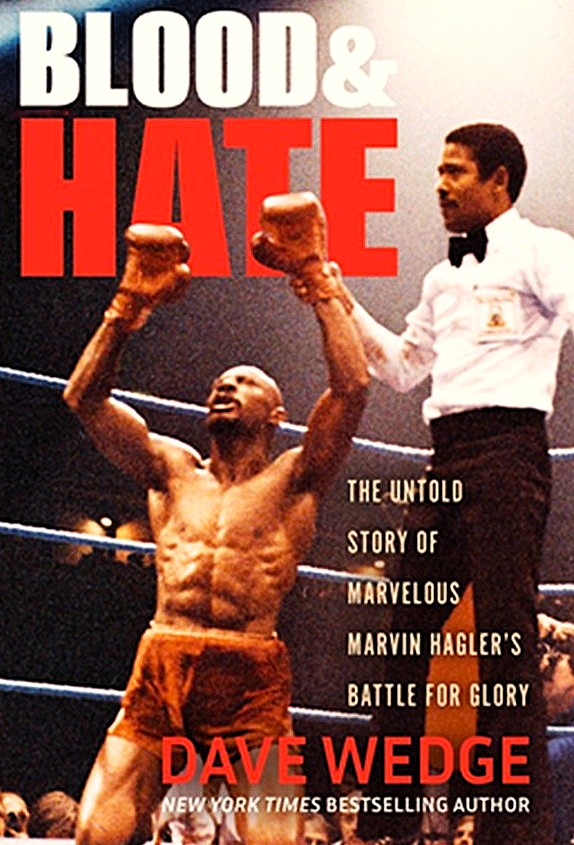
The subtitle of the book is “The Untold Story of Marvelous Marvin Hagler’s Battle For Glory,” and Wedge has plenty in here that even the biggest Hagler fans might not know about. He goes into the dynamics between Marvelous Marvin and his famous duo of trainers, the Petronelli brothers, but he additionally dives into the fighter’s relationships with his family, some of the biggest promoters of the day, and even the city of Brockton, Massachusetts itself.
We also discover a human touch to Hagler, one that differs from his image and his famous Spartan aesthetic. While growing up in Newark, Hagler was at times a sensitive child who “[coped] with his loneliness” by rescuing injured birds. Reminiscent of Mike Tyson and his love of pigeons, the young Marvin “built a coop on the roof of their building where he kept pigeons as friends. He once found a pet turtle, which he kept on the fire escape and sometimes put in the bathroom tub, much to his mother’s dismay.”

Wedge also shows us that Hagler was not always the ascetic warrior fans see in photos of him running on a freezing Cape Cod beach or hunkered down in a nearly empty hotel during the off season. According to Wedge there was another side to Hagler, but while “Marvin loved to have a good time… he steered clear of drugs, booze, women, and shady characters for much of his career. Other fighters from his era such as Sugar Ray Leonard [or] Leon Spinks, fell into some of those traps, resulting in unwelcome distractions that affected their careers.” Even in pleasure, Marvelous Marvin showed more discipline than the average fighter.
Some of the most fascinating stories here involve the few years before Hagler challenged Minter, and the tensions that arose between him and his small team. The common vision of Hagler, which does have a lot of truth behind it, is one of unwavering loyalty to the people who helped him from the beginning. But in fact, there was some vacillation as both Don King and Bob Arum made plays to sign Hagler, and got closer than many might expect. Wedge does well to show us that tense moment in Hagler’s life, letting the reader feel sympathy for a man who believed he should’ve held a world title by that point, but who also maintained strong feelings for the people who had helped him. It is a fascinating internal struggle.
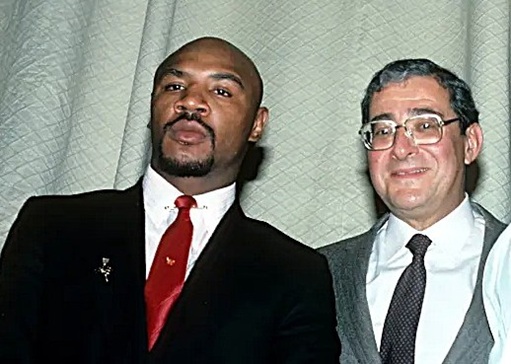
Wedge also goes back to some of the early rivalries in Hagler’s career. Most fans will know Marvelous Marvin as one of the four kings of the 1980s, along with Sugar Ray Leonard, Roberto Duran, and Thomas Hearns. But he had plenty of rivalries to start his career, including with some local Brockton fighters, which played out in battles staged at the local high school gymnasium. Even that early, Hagler was fighting for respect, as he had to show that he wasn’t just some kid from Newark, that he was really one of Brockton’s own.
While Blood and Hate adds plenty of information and texture to the early part of Marvin Hagler’s career, there are a few tangents taking away from the story. While I appreciate Wedge’s ambition of expanding on the Hagler story, and he is successful more often than not, there are moments that felt superfluous. For example, while it is clear that Wedge intends to show Hagler’s connections with Brockton, and that the legacy of Rocky Marciano is a massive one in the city, an entire chapter on Rocky’s career seems unnecessary.
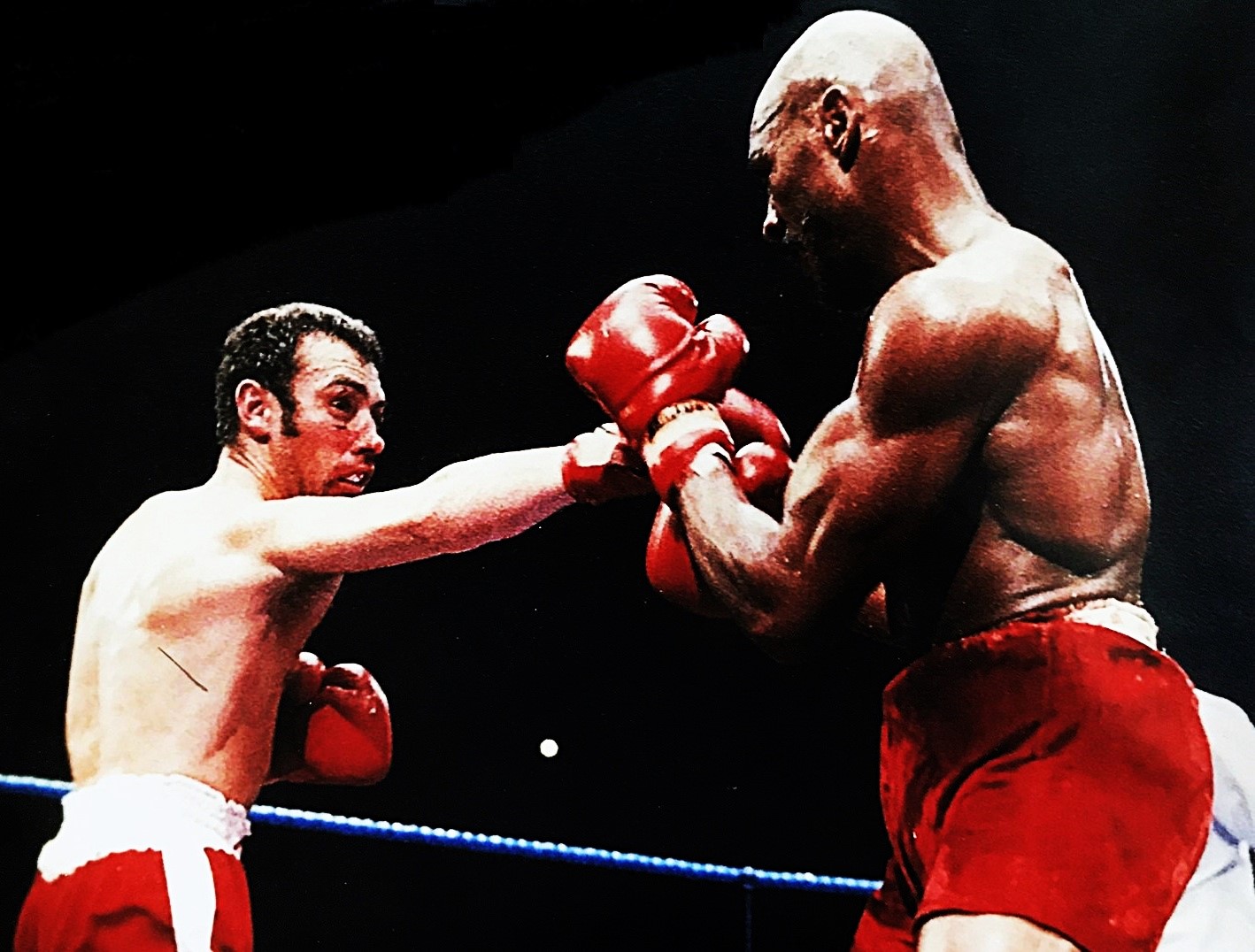
Additionally, there are several chapters strictly about Alan Minter. Some of the history is vital for understanding Hagler’s eventual triumph, especially Minter’s relationship with British white nationalist organizations, but not all of it. The result is there are moments where I feel pulled away from the story that, for the rest of the book, I was deeply immersed in, even if those moments are interesting in and of themselves.
Overall, though, Wedge absolutely achieves his goal of expanding upon the story and legacy of one of the greatest middleweights ever to climb through the ropes. Any boxing fan will enjoy it, and Marvelous Marvin fans will especially love it. The fact Wedge writes with a precise style, honed from years of journalistic experience, only adds to the pleasure of reading this fine book on the great Marvelous Marvin Hagler.
–Joshua Isard